Well, I admit it. Before my writing class, I wasn't a blogger. In fact, I'd only ever written one blog post in my life, and it was very . . . dry.
When I wrote my first blog post for this class, I really had no idea what blogging was all about. I assumed my blogging skills would have magically improved from my previous attempt. I compared, and realized my new blog post was . . . also dry. Sahara Desert sand.
As time passed, though, I decided to take the project to heart. I blogged away and started really having fun, and I started finding pictures and video clips to visually enhance what I was trying to say.
That ran me into a new problem—the temptation to let my visuals do the talking for me. For that reason, I cut a few of my visuals and worked to make my text look more visually appealing. Now I've learned how to make visuals and text work together to create visual appeal.
As I look back to my first posts, I realize how my writing has grown and changed. As the semester has progressed, I've incorporated pieces of writing knowledge I've gained from class into my posts.
It occurred to me that I'm really going to miss my blog now that it's done. It has been with me through hard times and fun, and this Christmas break I might just find something I want to blog about, and be at a loss.
Maybe I'll make a new blog . . . or just keep this one!
Monday, December 6, 2010

#20 Please Don't Stop the . . .
It's how I think aloud.
Sometimes to pray.
It can unite a crowd
It starts to play.
It helps me catch the tides
When I'm aground.
Deep in your soul it hides.
It can be found.
To think a thing all through
To show your thoughts.
Emotions true for you.
Something you sought.
It fills my soul with bliss,
I love to hear
And, hearing, feel its kiss
Caress my ear.
There's nothing in this world
I think that can
Set feelings more unfurled.
Music, begin!

Sometimes to pray.
It can unite a crowd
It starts to play.
It helps me catch the tides
When I'm aground.
Deep in your soul it hides.
It can be found.
To think a thing all through
To show your thoughts.
Emotions true for you.
Something you sought.
It fills my soul with bliss,
I love to hear
And, hearing, feel its kiss
Caress my ear.
There's nothing in this world
I think that can
Set feelings more unfurled.
Music, begin!

Sunday, December 5, 2010
#19 Doubts
I pushed open the door to the theater in the Crabtree Building, and stepped into the light squinting. Inside, I was doubting.
I had just finished watching a movie called "Doubt" for my film class. After seeing it, I walked out into the night feeling confused. It was a well-done film, and I couldn't decide if I should side with the nun who thought every little thing should be punished, or the priest who liked to indulge others but might be a wrongdoer himself.

The nun had a valid viewpoint—the allegations made against the priest were serious, and definitely needed attention.
However, the priest gave an explanation that took care of the problem.
. . . then again, was his explanation adequate?
On the other hand, the nun had little evidence.
The priest could be lying.
The nun could be too picky.
As I got to the car, I wondered what made the dilemma such a hard one to take sides on. I thought back to the principles of rhetoric I learned in writing class, and remembered what made a good argument. In a good argument, you shouldn't discredit the other side—you should acknowledge their viewpoint and give a clear, concise, adequate response.
While waiting at a red light, I thought back through the film. Both sides were presented well, and both gave clear responses to each other, but both left me wondering if either had presented adequate evidence to support their viewpoint. I also left wondering if, despite all the fireworks, either party was really secure in their own viewpoint. That's the first step to creating an argument.
I, as a third party, saw both sides, but only part of each. I couldn't come to a final judgment of them any more than I can thoroughly judge anyone in real life. I think that's what the film was trying to say.
They have their doubts, and so do I.
The light turned green.
I had just finished watching a movie called "Doubt" for my film class. After seeing it, I walked out into the night feeling confused. It was a well-done film, and I couldn't decide if I should side with the nun who thought every little thing should be punished, or the priest who liked to indulge others but might be a wrongdoer himself.

The nun had a valid viewpoint—the allegations made against the priest were serious, and definitely needed attention.
However, the priest gave an explanation that took care of the problem.
. . . then again, was his explanation adequate?
On the other hand, the nun had little evidence.
The priest could be lying.
The nun could be too picky.
As I got to the car, I wondered what made the dilemma such a hard one to take sides on. I thought back to the principles of rhetoric I learned in writing class, and remembered what made a good argument. In a good argument, you shouldn't discredit the other side—you should acknowledge their viewpoint and give a clear, concise, adequate response.
While waiting at a red light, I thought back through the film. Both sides were presented well, and both gave clear responses to each other, but both left me wondering if either had presented adequate evidence to support their viewpoint. I also left wondering if, despite all the fireworks, either party was really secure in their own viewpoint. That's the first step to creating an argument.
I, as a third party, saw both sides, but only part of each. I couldn't come to a final judgment of them any more than I can thoroughly judge anyone in real life. I think that's what the film was trying to say.
They have their doubts, and so do I.
The light turned green.
Saturday, December 4, 2010
#18 Humbled
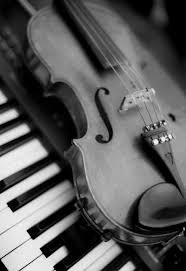
Screeeeeeeech!
There went my bow again—too close to the bridge. "Come on!" I begged out loud. I took a deep breath and tried again.
Screeeeeeeech!
"Aaagh!" I shoved my violin back into the case in frustration and turned to the piano. The piano wasn't hard to find—it was right behind me. In the practice room I had selected, the only space to stand in that wasn't taken up by the baby grand was about the size of a shower. It wasn't optimal conditions for practicing bowing anyway, I told myself. I could work on it more when I got home, where there was more room.
A tuba in the squidgy cubby next to me bellowed "Sorcerer's Apprentice," a jazz group played down the hall and several violins sang hauntingly from somewhere nearby. I sighed as I settled down on the bench, my fingers caressing the cool, familiar black and white keys. Then, I added my own music to the joyous confusion. Bach, Beethoven, Rachmaninoff, Gershwin—even scales! Anything and everything I could think of flowed from my fingers. What a relief! I could make music! Good music—not screeches!
Then, I slowed. I stopped. I sat on the bench quietly. My right hand reached to squeeze my left wrist.
Why me? I thought sadly. Why, when I love the piano so much? This time, it was the left one. Next time, it would probably be the right one. Or both. My dreams of being a piano major teetered again, as they had so many times. Why did my nerves have to keep finding something wrong with my wrists when doctors couldn't?
I sat very still, looking at the blank white keys. I could feel the corners of my eyes prick. I glanced over at my violin, sitting solidly in its second-hand, beat-up brown case. Hateful instrument.
Why on earth am I trying violin? I sighed; I already knew the answer. More than almost anything, I loved making music. If I couldn't make music, it would break my heart. If the time ever came that my wrists stopped my piano altogether . . .
One doctor had told me that stringed instruments were some of the best for wrists. My mom had a leftover violin in a case from a thrift store, and when I came to college she said, "here, this case and everything in it is yours."
That was very generous of her, but now that I had it, I discovered the violin was a monster. It could play things that weren't notes, and it made both my hands do funny things at the same time. I would say trying to play it was like trying to pat my head and rub my stomach simultaneously, except that I could do the latter.
I was not anticipating the recital that my teacher insisted I perform in. I sighed and turned back to the violin. Maybe if I stood sideways, I could bow without hitting the wall . . .
A few days later, I sat in the audience, waiting. Bach, Vivaldi and Gershwin floated past my ears. Yay, I get to play a beginning minuet and "Pop Goes the Weasel," I thought. Then, something dawned on me.
In my piano recitals, the last few years, I've almost always been the last piece on the program. This time I'm not.
The pressure at piano recitals was tremendous—I'd always felt that if I didn't do my best, I wasn't doing credit to all the people who went before me who were expecting me to close the recital with a show-stopping performance.
This time, almost everyone is better than me. If I mess up or not, nobody will really care. Either way, they'll know I'm really bad at violin.
Surprisingly, this humbling realization was liberating.
I can just play! I'm not at the intense stage yet that I am with piano! I don't need to be good immediately, and they'll understand that.
As I played my trick version of "Pop Goes the Weasel," with my arm wound around my head so I was bowing backwards, I squeaked a little. But what with the piano accompaniment (which I composed), maybe nobody noticed. And even if they did, they were too busy appreciating my trick for what it was. They were a kind audience.
I smiled as I took a bow.
Thursday, December 2, 2010
#17 Tree
Me.
Pick me.
Please, pick me.
All around the voices cry.
We hear them, my sister and I.
Me.
This one?
We touch it.
No. Not that one.
We move on. We don't see.
They are disappointed, left behind.
But we don't come back. We don't know.
Me.
We search.
How they bristle.
We shut our ears. Look.
We can't hear them, but we see.
See here. This one. This is the one.
Is it? It is a pancake. But now it says me.
Me.
We hear it.
We see. Yes, we see.
We see that it is a pancake.
Stifled by others, it will unfold.
It does not need to always be a pancake.
It can change in the warmth. We will help it.
Me.
Tree.
Yes, you.
We hear you.
You are an umbrella.
Pick me.
Please, pick me.
All around the voices cry.
We hear them, my sister and I.
Me.
This one?
We touch it.
No. Not that one.
We move on. We don't see.
They are disappointed, left behind.
But we don't come back. We don't know.
Me.
We search.
How they bristle.
We shut our ears. Look.
We can't hear them, but we see.
See here. This one. This is the one.
Is it? It is a pancake. But now it says me.
Me.
We hear it.
We see. Yes, we see.
We see that it is a pancake.
Stifled by others, it will unfold.
It does not need to always be a pancake.
It can change in the warmth. We will help it.
Me.
Tree.
Yes, you.
We hear you.
You are an umbrella.
Wednesday, December 1, 2010
#16 All That Jazz
 Robert Schumann, a famous composer, named the fiery and calm sides of his personality "Florestan" and "Eusebius," respectively. Inspired by him, I've decided to name the bubbly and precautionary sides of my personality after the Latin words for "indulgence" and "conscience." They are "Clementia" and "Conscientia," respectively. Because they generally disagree—sometimes to the point of seeming like two completely different people—I thought they'd make a good practice narrative. If they were to have a conversation, it might go something like this:
Clementia: "You need to hear about my obsession! The world must know, and I'm starting with you!"
Conscientia: "I'd rather not talk about it right now. Let's talk about it later."
Clementia: "No, not later! I'm going to confess right here, right now! Here goes:"
Takes a deep breath.
"I LOVE JAZZ!!! Lovelovelovelovelovelovelovelovelovelovelovelovelove!!!"
Gasps for breath.
Conscientia: "Well, now that that's over with, let's talk. Maybe we can get you over this obsession if we talk it through while it's out in the open."
Clementia: "Okay!"
Conscientia: "All right now, I'm going to ask you some questions, and I want you to just give me honest answers from your heart. Are you ready for the first question?"
Clementia: "Yep!"
Conscientia: "How long have you been obsessed with basketball players?"
Clementia: "Huh?"
Conscientia: "Is it their sweaty bodies and sleek musculature that you view with such complete adoration, or is it the hardcore, neck-in-neck nature of the game?"
Clementia: "—WAIT!!! What are we talking about? I said JAZZ!!!"
Conscientia: "That's what I thought you said."
Clementia: "I meant the MUSIC!!!"
Conscientia: "Oh. I thought you meant the basketball team."
Clementia: "Why on earth would I be thinking about basketball? Life is all about MUSIC!!! Everything is about music! Who cares about basketball, anyway?"
Conscientia: "Shhh! Lots of people love basketball. You don't mind it, yourself."
Clementia: "Maybe, but I LOVEJAZZLOVEMUSICLOVEJAZZMUSICLOVE!!!
As Clementia's eyes cross in rapture, Conscientia throws her hands in the air and gives up.

Clementia: "Oh, Conscientia—you know what else I love to obsession? Chocolatechocolatechocolatechocolatechocolatechocolatechocolate!!!"
Sunday, November 28, 2010
#15 Christus Consolator—A Message of Peace and Hope

Carl Bloch (1834–90) created many beautiful paintings and etchings in his lifetime. One of the most magnificent, in my opinion, is the oil-on-canvas altarpiece from Sofia Albertina Kyrka in Landskrona, Sweden, which Bloch painted in 1884, only six years before his death. It is entitled “Christus Consolator” or “Come Unto Me.” With over 1% of Sweden’s population emigrating annually from Sweden to America during the 1880s, it is likely some of the original congregation who first saw this painting in their church left for America and never saw it again. Now, this painting has come to America, as if following those who came here and left it in years past. My ancestors came from Sweden, so I feel a special connection to this piece of Bloch’s work, as though it followed me from the land of my ancestors to bring me a message of peace and hope.
The message of “Christus Consolator” is well expressed in the Savior’s own words, as quoted by Matthew: “Come unto me, all ye that labour and are heavy laden, and I will give you rest” (Matt. 11: 28–30). The painting shows the blind, lame, captive, beggar, widow, fatherless and others gathering at the feet of the Savior’s towering presence—his size in comparison to the others represents his omnipotence and ability to protect them. His arms are outstretched to the viewer, inviting one and all to come join those at his feet and be protected as they are “under his wings” (Matt. 23: 37).
I thought the presentation of Bloch’s pictures at Brigham Young University’s Museum of Art was very tastefully done. On the wall at the beginning was a quote from Carl Bloch, which said, “God helps me, that is what I think, and then I am calm.” This motto applied not only to Bloch’s personal life, but also to the impression his work and the exhibit left with me. Beautiful, classical music filled the museum instead of the hymns one might expect, reminding visitors that Christ invites those of all denominations to come to him. Many of the altarpieces were framed in a way that suggested the front of a church, letting one get a brief feel for what the picture must have looked like in its original church setting. Overhead lighting made the pictures of Christ sparkle, showing that his light comes from above. The altarpieces had chairs tastefully set in front of them so visitors could sit and contemplate.
I took the opportunity to sit in front of “Christus Consolator” and think for a while. The beautiful message of hope and peace soaked into me as I sat there, and I thought about my own life. I was reminded that I can come to Christ, and he will always be there for me, even in my darkest and most troubled hours. Even when I have no other hope, he will be there for me. “Christus Consolator” was the last piece of the exhibit, and I left with a renewed feeling of peace and hope, and a determination to come to Christ. I know God will help me, so I can be calm. That’s what Bloch’s exhibit did for me.
Saturday, November 27, 2010
#14 Personal Narrative—Meet New Faces
Time had crumbled the steps, like it was crumbling my past behind me. It was a long way down the side of the green hill to the park.
“Look, they’ve already started!” I scampered down ahead of my older sister Melissa. Her voice came crawling over my shoulder from behind, grumbling, “I hate being late!”
Ahead of me, I could see the huge pavilion in the center of the park swarming with people. Music blasted from speakers, and my eardrums shivered with anticipation. Long tables loaded with food invited me to come dig in. I had just turned 18, and this was my first big Young Single Adult activity. I was excited to jump in and be a part of it all. I was dressed in clean new clothes, my hair was swept back in a headband, and I was ready to go meet new faces. I heard the satisfying clang of pitched horseshoes striking metal posts, and saw people dancing about tossing footballs and playing ultimate Frisbee.
“What should we do first?” I asked. Melissa stared at her shuffling feet and the words, “are you sure you want to go?” emerged from somewhere under her long bangs. I assured her I did, and decided to join the game of ultimate Frisbee. I wanted her to come with me, but she declined, preferring to hunker down on a bench at the side and watch me. A few years ago she’d broken her leg, and she’d never enjoyed active sports since. “Have fun,” she said, and I went.
I ran around on the outskirts of the game, with little success. The Frisbee hardly came close to me, and although I got an occasional swipe at it, I wasn’t contributing much to the game. No one even seemed to notice me.
I was almost ready to humor Melissa and go home with her, when the Frisbee flew wild and headed for an empty spot of field near me. This was my chance! I could catch it and contribute to the team! I ran as fast as I could, my eyes on the sky blue Frisbee as it descended. Right before I got to it, another pair of hands snatched it out of the air. I looked down to find a young man (incidentally, a member of my team) coming at full speed from the opposite direction. It was too late for me to do anything. Our faces collided with a dull, solid impact, and I tumbled to the ground. I caught a brief glimpse of him collapsing to the grass next to me and heard him yelling “Ow, ow!" as I buried my face in my hands, trying to somehow retroactively protect it from what had already happened.
Brief snippets of thought floated through my head.
I think my nose is broken.
I’ve hurt him. I feel awful. I hope he’s all right.
I should have been looking where I was going.
I must be really sweaty; my face is moist and sticky.
The young man recovered before I did, and I heard him saying anxiously, “Are you all right? Can I help you up?” I realized I had been lying on the ground clutching my face, which was a mass of pain, for long enough that a crowd had gathered.
“I’m fine,” I mumbled. I sat up, embarrassed, and pushed my hair out of my face. The young man, crouching next to me, said, “Oh no! We’ve got blood!”
I looked down to find that what I thought was sweat was really bright red blood, pouring down my hands and arms like water. I thought it might be coming from my nose, but someone nearby said, “She’s got a cut on her forehead.”
I clapped my bloody hands to my head, trying to somehow contain the blood, as the young man helped me up and announced, “I’m taking her to the bathroom. Somebody find a girl to go in with her.”
He put his arm around me, gripped me firmly and marched me toward the bathroom. Blood gushed between my fingers and showered my clothes and sandals.
“I’m really sorry,” he said, “I wasn’t watching where I was going.”
Someone, a fast runner, came panting up beside me and said, “here,” thrusting a wad of napkins from the pavilion into my hands. I gratefully pressed them against my forehead. Someone said, “They’re getting a nurse. Don’t worry.”
“Where’s my sister?” I asked of no one in particular. “It doesn’t matter,” said the young man. “Let’s just get you to the bathroom.” I glanced over my shoulder, and was relieved to see Melissa running to catch up with me.
In the park’s dingy bathroom, she dabbed at me with damp toilet tissue—there were no paper towels. The door opened and in came the nurse—the mom of one of my friends. “Oh, it’s you!” she said. She brought me back out into the light so she could have a look at the cut. The young man was waiting right outside the door, as were several other people, and they watched as she had me peel away the napkins.
“Even minor head injuries always bleed a lot,” she assured me. “I wouldn’t be too worried.” As the napkins came away, however, she took one look and said, “You’re definitely going to need stitches.”
Several things happened at once. Someone said, “Does anyone know who she is? I’ll take her to the emergency room.” Melissa spoke up, saying she’d called my parents and they were coming to get me. One lady cleaned me up with a bright-colored washcloth, and another produced a first-aid kit and got some sterile gauze to replace the napkins. The young man apologized again, and this time I had enough presence of mind to apologize back and hope he was all right. Someone wondered if he was getting a black eye, but he shrugged it off, saying he’d had worse.
While we sat on the bank of a canal by the parking lot, waiting for my parents to arrive, the nurse took a look at the purple rim developing under the young man’s eye, and agreed he was getting a “shiner.” I apologized, and he shook it off, saying, “It was my fault. I wasn’t looking where I was going.”
My parents arrived in their work clothes, all covered in paint from painting our bathrooms. The young man ran up to them, introduced himself, and said, “I’ve hurt your daughter, and I’m really sorry. She keeps apologizing, but it was all my fault.” I was surprised, because that’s just the way I felt, except the other way around. I called back one last apology and thanks to him as I was ushered into the family van.
While waiting for treatment, I assessed myself and found a button on my shirt was missing, my nose did seem to be broken, and I was bleeding out of both nostrils—I hadn’t noticed that before. While I sat there feeling sorry for myself, I looked around and saw a girl waiting for treatment from a biking accident assessing herself cheerfully with her friends, saying, “Wow, there’s another bruise! How on earth did I get that?”
Once I was in the operating room, the doctor’s assistant came in with a timid medical student, and told her to give me a shot. As I pulled up my sleeve, I noticed the student was shaking. I wanted to say, “Why on earth are you nervous? I’m the one lying here bleeding!”
Then I wished I could comfort her—she was just as scared as I was, and she was doing something new in an unfamiliar environment.
The doctor chatted with my mom as he stitched me up, while I tried not to look at the giant face and curved needle looming over me.
Hero regains consciousness in movie to blearily look up at hovering medic, I thought.
“I’ve been working on soldiers in Iraq,” the doctor said. “For a cut like this, I’d sew them up, wish them well, and send them back to work. All in a normal day for them.”
Well, they could go back to normalcy, but I assured myself I was a special case. My face had been brutally bashed in! I had the right to withdraw from activities!
When I got home, I cleaned up, changed into fresh clothes and got a good look at my cut. Although it was covered with steri-strips and held together with at least 15 invisible stitches, I could see it was about an inch long. My first thought was to register horror at the fact that I’d be scarred in the middle of my forehead forever. My second thought was, Well, this is what I get for trying to be involved. No more activities for me.
The next day I still went to church, to my new singles’ ward, even though I wasn’t feeling well. Word had spread about the mishap, and my friend (the daughter of the nurse who helped me) was happy to tell everyone who hadn’t heard about it. I was surprised to find that lots of people expressed concern, and I became a sort of celebrity. People came out of the woodwork to ask me about it, and tell me their own accident stories. An outgoing, active girl in the ward had broken a tooth and split her lip playing ultimate Frizbee. I was surprised to learn how many people had stories similar to or worse than mine. As I walked down the hallway at church side-by-side with Melissa, along with my friend and another new friend, I wondered.
With my self-consciousness and problems, am I really as different from others as I think I am?
I might still have shied away from activities, but for one thing. I have a problem, I thought. There’s a really nice young man out there somewhere, but no one can seem to remember his name or just what he looked like.
“I guess I’ll have to go to more Young Single Adult activities,” I said to Melissa. “You never know who you might run into there. Figuratively speaking, of course. Not literally.”
“Look, they’ve already started!” I scampered down ahead of my older sister Melissa. Her voice came crawling over my shoulder from behind, grumbling, “I hate being late!”
Ahead of me, I could see the huge pavilion in the center of the park swarming with people. Music blasted from speakers, and my eardrums shivered with anticipation. Long tables loaded with food invited me to come dig in. I had just turned 18, and this was my first big Young Single Adult activity. I was excited to jump in and be a part of it all. I was dressed in clean new clothes, my hair was swept back in a headband, and I was ready to go meet new faces. I heard the satisfying clang of pitched horseshoes striking metal posts, and saw people dancing about tossing footballs and playing ultimate Frisbee.
“What should we do first?” I asked. Melissa stared at her shuffling feet and the words, “are you sure you want to go?” emerged from somewhere under her long bangs. I assured her I did, and decided to join the game of ultimate Frisbee. I wanted her to come with me, but she declined, preferring to hunker down on a bench at the side and watch me. A few years ago she’d broken her leg, and she’d never enjoyed active sports since. “Have fun,” she said, and I went.
I ran around on the outskirts of the game, with little success. The Frisbee hardly came close to me, and although I got an occasional swipe at it, I wasn’t contributing much to the game. No one even seemed to notice me.
I was almost ready to humor Melissa and go home with her, when the Frisbee flew wild and headed for an empty spot of field near me. This was my chance! I could catch it and contribute to the team! I ran as fast as I could, my eyes on the sky blue Frisbee as it descended. Right before I got to it, another pair of hands snatched it out of the air. I looked down to find a young man (incidentally, a member of my team) coming at full speed from the opposite direction. It was too late for me to do anything. Our faces collided with a dull, solid impact, and I tumbled to the ground. I caught a brief glimpse of him collapsing to the grass next to me and heard him yelling “Ow, ow!" as I buried my face in my hands, trying to somehow retroactively protect it from what had already happened.
Brief snippets of thought floated through my head.
I think my nose is broken.
I’ve hurt him. I feel awful. I hope he’s all right.
I should have been looking where I was going.
I must be really sweaty; my face is moist and sticky.
The young man recovered before I did, and I heard him saying anxiously, “Are you all right? Can I help you up?” I realized I had been lying on the ground clutching my face, which was a mass of pain, for long enough that a crowd had gathered.
“I’m fine,” I mumbled. I sat up, embarrassed, and pushed my hair out of my face. The young man, crouching next to me, said, “Oh no! We’ve got blood!”
I looked down to find that what I thought was sweat was really bright red blood, pouring down my hands and arms like water. I thought it might be coming from my nose, but someone nearby said, “She’s got a cut on her forehead.”
I clapped my bloody hands to my head, trying to somehow contain the blood, as the young man helped me up and announced, “I’m taking her to the bathroom. Somebody find a girl to go in with her.”
He put his arm around me, gripped me firmly and marched me toward the bathroom. Blood gushed between my fingers and showered my clothes and sandals.
“I’m really sorry,” he said, “I wasn’t watching where I was going.”
Someone, a fast runner, came panting up beside me and said, “here,” thrusting a wad of napkins from the pavilion into my hands. I gratefully pressed them against my forehead. Someone said, “They’re getting a nurse. Don’t worry.”
“Where’s my sister?” I asked of no one in particular. “It doesn’t matter,” said the young man. “Let’s just get you to the bathroom.” I glanced over my shoulder, and was relieved to see Melissa running to catch up with me.
In the park’s dingy bathroom, she dabbed at me with damp toilet tissue—there were no paper towels. The door opened and in came the nurse—the mom of one of my friends. “Oh, it’s you!” she said. She brought me back out into the light so she could have a look at the cut. The young man was waiting right outside the door, as were several other people, and they watched as she had me peel away the napkins.
“Even minor head injuries always bleed a lot,” she assured me. “I wouldn’t be too worried.” As the napkins came away, however, she took one look and said, “You’re definitely going to need stitches.”
Several things happened at once. Someone said, “Does anyone know who she is? I’ll take her to the emergency room.” Melissa spoke up, saying she’d called my parents and they were coming to get me. One lady cleaned me up with a bright-colored washcloth, and another produced a first-aid kit and got some sterile gauze to replace the napkins. The young man apologized again, and this time I had enough presence of mind to apologize back and hope he was all right. Someone wondered if he was getting a black eye, but he shrugged it off, saying he’d had worse.
While we sat on the bank of a canal by the parking lot, waiting for my parents to arrive, the nurse took a look at the purple rim developing under the young man’s eye, and agreed he was getting a “shiner.” I apologized, and he shook it off, saying, “It was my fault. I wasn’t looking where I was going.”
My parents arrived in their work clothes, all covered in paint from painting our bathrooms. The young man ran up to them, introduced himself, and said, “I’ve hurt your daughter, and I’m really sorry. She keeps apologizing, but it was all my fault.” I was surprised, because that’s just the way I felt, except the other way around. I called back one last apology and thanks to him as I was ushered into the family van.
While waiting for treatment, I assessed myself and found a button on my shirt was missing, my nose did seem to be broken, and I was bleeding out of both nostrils—I hadn’t noticed that before. While I sat there feeling sorry for myself, I looked around and saw a girl waiting for treatment from a biking accident assessing herself cheerfully with her friends, saying, “Wow, there’s another bruise! How on earth did I get that?”
Once I was in the operating room, the doctor’s assistant came in with a timid medical student, and told her to give me a shot. As I pulled up my sleeve, I noticed the student was shaking. I wanted to say, “Why on earth are you nervous? I’m the one lying here bleeding!”
Then I wished I could comfort her—she was just as scared as I was, and she was doing something new in an unfamiliar environment.
The doctor chatted with my mom as he stitched me up, while I tried not to look at the giant face and curved needle looming over me.
Hero regains consciousness in movie to blearily look up at hovering medic, I thought.
“I’ve been working on soldiers in Iraq,” the doctor said. “For a cut like this, I’d sew them up, wish them well, and send them back to work. All in a normal day for them.”
Well, they could go back to normalcy, but I assured myself I was a special case. My face had been brutally bashed in! I had the right to withdraw from activities!
When I got home, I cleaned up, changed into fresh clothes and got a good look at my cut. Although it was covered with steri-strips and held together with at least 15 invisible stitches, I could see it was about an inch long. My first thought was to register horror at the fact that I’d be scarred in the middle of my forehead forever. My second thought was, Well, this is what I get for trying to be involved. No more activities for me.
The next day I still went to church, to my new singles’ ward, even though I wasn’t feeling well. Word had spread about the mishap, and my friend (the daughter of the nurse who helped me) was happy to tell everyone who hadn’t heard about it. I was surprised to find that lots of people expressed concern, and I became a sort of celebrity. People came out of the woodwork to ask me about it, and tell me their own accident stories. An outgoing, active girl in the ward had broken a tooth and split her lip playing ultimate Frizbee. I was surprised to learn how many people had stories similar to or worse than mine. As I walked down the hallway at church side-by-side with Melissa, along with my friend and another new friend, I wondered.
With my self-consciousness and problems, am I really as different from others as I think I am?
I might still have shied away from activities, but for one thing. I have a problem, I thought. There’s a really nice young man out there somewhere, but no one can seem to remember his name or just what he looked like.
“I guess I’ll have to go to more Young Single Adult activities,” I said to Melissa. “You never know who you might run into there. Figuratively speaking, of course. Not literally.”
Friday, November 26, 2010
#13 Post Hoc
I wake before noon,
Not a moment too soon.
I've slept for ten hours—far gone is the moon.
To the kitchen I fly,
To breakfast on pie,
If pie were narcotic, by now I'd be high.
When I'm ready to pop,
To the keyboard I hop,
To play Christmas tunes until someone says "stop!"
No one stops me at all,
So I deck the hall,
With carols proclaiming the death-bed of fall.
While I tickle the keys,
Here's my sister, and she's
Come to tell me of spacemen with cryptic disease.
Once she's done, I'm away,
Then remember today
I must write three papers—oh hip hip, hooray!
This is my living,
Day-after-Thanksgiving,
With bits of randomness through my brain sieving.
Not a moment too soon.
I've slept for ten hours—far gone is the moon.
To the kitchen I fly,
To breakfast on pie,
If pie were narcotic, by now I'd be high.
When I'm ready to pop,
To the keyboard I hop,
To play Christmas tunes until someone says "stop!"
No one stops me at all,
So I deck the hall,
With carols proclaiming the death-bed of fall.
While I tickle the keys,
Here's my sister, and she's
Come to tell me of spacemen with cryptic disease.
Once she's done, I'm away,
Then remember today
I must write three papers—oh hip hip, hooray!
This is my living,
Day-after-Thanksgiving,
With bits of randomness through my brain sieving.
Wednesday, November 24, 2010
#12 Allusion
Allusion: a reference to a historical event or person. Allusions are also made to events and persons from literature and other media (film, television, etc.).
—Writing and Rhetoric
When I posted "This is the Moment" from "Jekyll and Hyde," I was intending for the triumphant lyrics and stirring music to support my enthusiastic take on life. It was only after I posted it that I learned that in the play (which I have never seen), the song comes right before Jekyll takes a potion that turns him into Hyde and ruins his life. After reading my post, some people who were familiar with the play might have thought I was going to go mad or something.
That wasn't what I was thinking of at all when I posted it.
Although I don't plan to remove the post, because the song is amazingly awesome and I love it, and also because the song itself expresses what I was intending, I have since been thinking more about allusion. Without realizing it, I was alluding to something I was unaware of, and I possibly tampered with the intended effect of my post as a result.
Now I'm going to give a little example of allusion, where I actually know what I'm alluding to. First, here's a scripture:
"For they were set to be a light unto the world, and to be the saviors of men."
—D&C 103:9
Here's a video clip to go with it. My claim is that those in the scripture are like those in the clip. If you know a little backstory about each one, you'll realize what I'm trying to say through allusion. (On a side note, if you listen carefully, you'll notice the song itself has an allusion to the scriptures.)
—Writing and Rhetoric
When I posted "This is the Moment" from "Jekyll and Hyde," I was intending for the triumphant lyrics and stirring music to support my enthusiastic take on life. It was only after I posted it that I learned that in the play (which I have never seen), the song comes right before Jekyll takes a potion that turns him into Hyde and ruins his life. After reading my post, some people who were familiar with the play might have thought I was going to go mad or something.
That wasn't what I was thinking of at all when I posted it.
Although I don't plan to remove the post, because the song is amazingly awesome and I love it, and also because the song itself expresses what I was intending, I have since been thinking more about allusion. Without realizing it, I was alluding to something I was unaware of, and I possibly tampered with the intended effect of my post as a result.
Now I'm going to give a little example of allusion, where I actually know what I'm alluding to. First, here's a scripture:
"For they were set to be a light unto the world, and to be the saviors of men."
—D&C 103:9
Here's a video clip to go with it. My claim is that those in the scripture are like those in the clip. If you know a little backstory about each one, you'll realize what I'm trying to say through allusion. (On a side note, if you listen carefully, you'll notice the song itself has an allusion to the scriptures.)
Sunday, November 21, 2010
#11 Give Thanks for the Moment!
This is the moment! This is the day!
As Thanksgiving rounds the corner, it's important to take a moment to express gratitude. Of course I'm grateful for the break (although it gives me an elephant's weight of homework), and the dinner (although it makes me feel like an elephant), but those aren't the focus for me. As I prepare for a brief hiatus from school, I have the opportunity to pull back and see how richly my life is blessed. So many things in my life are wonderful right now. This is the perfect moment to count a few of my blessings:
1. Family. Without them in my life, I would have so little. They not only take care of many of my physical needs, but they also emotionally sustain me, feed me spiritually, and laugh at me. (With me. They laugh with me.)
2. School. Yes, I'm even grateful for homework. Indirectly. Without school, I would just be bumping around, wasting my potential and feeling unfulfilled. It's the next step in my life, and even though it fills my life full to bursting right now, I'm confident I will have a richer life later on because of it.
3. God. What else is there to say? He is everything, in every part of my life. Everything has to do with him. I would be nothing, have nothing and have no hope of anything without him.
These things combine to make a wonderful blend that is my life right now. It's a lot of work, but it is full of potential, and God has his hand in every aspect of it. This is my moment and my hour, and I'm grateful for it.
When I look back, I will always recall, moment for moment, this was the moment, the greatest moment of them all!
As Thanksgiving rounds the corner, it's important to take a moment to express gratitude. Of course I'm grateful for the break (although it gives me an elephant's weight of homework), and the dinner (although it makes me feel like an elephant), but those aren't the focus for me. As I prepare for a brief hiatus from school, I have the opportunity to pull back and see how richly my life is blessed. So many things in my life are wonderful right now. This is the perfect moment to count a few of my blessings:
1. Family. Without them in my life, I would have so little. They not only take care of many of my physical needs, but they also emotionally sustain me, feed me spiritually, and laugh at me. (With me. They laugh with me.)
2. School. Yes, I'm even grateful for homework. Indirectly. Without school, I would just be bumping around, wasting my potential and feeling unfulfilled. It's the next step in my life, and even though it fills my life full to bursting right now, I'm confident I will have a richer life later on because of it.
3. God. What else is there to say? He is everything, in every part of my life. Everything has to do with him. I would be nothing, have nothing and have no hope of anything without him.
These things combine to make a wonderful blend that is my life right now. It's a lot of work, but it is full of potential, and God has his hand in every aspect of it. This is my moment and my hour, and I'm grateful for it.
When I look back, I will always recall, moment for moment, this was the moment, the greatest moment of them all!
Saturday, November 20, 2010
#10 A Play in Three Acts
A Mom's Rhetoric
A Play in Three Acts By Miriam Burton
ACT I: Ethos
MOM and LITTLE GIRL enter room.
MOM: You need to do your chores now. Go on.
LITTLE GIRL: Why?
MOM: Because I said so.
MOM and LITTLE GIRL leave room. LITTLE GIRL is dissatisfied.
ACT II: Pathos
MOM and LITTLE GIRL enter room.
MOM: You need to do your chores now. Go on.
LITTLE GIRL: Why?
MOM (begins to cry): Because I work around the house all day, and the least you can do is help out once in a while!
MOM and LITTLE GIRL leave room. MOM is still crying, and LITTLE GIRL is distressed.
ACT III: Logos
MOM and LITTLE GIRL enter room.
MOM: You need to do your chores now. Go on.
LITTLE GIRL: Why?
MOM: Because someone needs to do them, or everything will end up run-down and messy. You don't want that, do you? I could do all the chores, but it's your responsibility as a member of this house to help out. Besides, you need to learn how to work so you can be a mother yourself someday.
MOM and LITTLE GIRL leave room. LITTLE GIRL is resigned.
THE END
A Play in Three Acts By Miriam Burton
ACT I: Ethos
MOM and LITTLE GIRL enter room.
MOM: You need to do your chores now. Go on.
LITTLE GIRL: Why?
MOM: Because I said so.
MOM and LITTLE GIRL leave room. LITTLE GIRL is dissatisfied.
ACT II: Pathos
MOM and LITTLE GIRL enter room.
MOM: You need to do your chores now. Go on.
LITTLE GIRL: Why?
MOM (begins to cry): Because I work around the house all day, and the least you can do is help out once in a while!
MOM and LITTLE GIRL leave room. MOM is still crying, and LITTLE GIRL is distressed.
ACT III: Logos
MOM and LITTLE GIRL enter room.
MOM: You need to do your chores now. Go on.
LITTLE GIRL: Why?
MOM: Because someone needs to do them, or everything will end up run-down and messy. You don't want that, do you? I could do all the chores, but it's your responsibility as a member of this house to help out. Besides, you need to learn how to work so you can be a mother yourself someday.
MOM and LITTLE GIRL leave room. LITTLE GIRL is resigned.
THE END
Thursday, November 18, 2010
#9 A Minor Setback
10 Steps For Proper Disposal of Research Paper:
1. Take out staple and discard.
2. Wad paper into compact spherical shape.
3. Place in mouth and chew.
4. Remove from mouth.
5. Place on ground and jump upon.
6. Pick up and shred into fingernail-sized bits.
7. Place in sink disposal.
8. Turn on disposal.
9. Discard computer file.
10. Empty computer trash.
When you feel this way about your research paper, upon which you have lavished many hours of attention, and into which you have poured so many choice bits of research that you've had a hard time incorporating them all (but that's another story), you have a problem.
I had a problem.
After I saw a clip in film class about my research paper topic, I was just about ready to scrap my whole paper. The clip was true to life, but it contradicted my thesis statement. I had some serious reevaluating to do.
I did the reevaluating, and came to a happy conclusion.
Using my knowledge of film gained from the class, I realized the clip portrayed my subject in a biased light. Although it was based in truth, it used angles, costumes, acting and so forth to portray the subject matter as awkward and weird.
After I got home I reviewed my paper and the research behind it, and was relieved to find that, because of planning and good research, my viewpoint was sound.
That's not to say the clip was wrong, and I was right. We both had reasonably accurate viewpoints—we were just coming at the subject from different angles. But fortunately, thanks to prewriting and a gazillion-and-two good sources, I realized my paper could still hold its own.
As it turned out, the clip actually supported my thesis in the long run. My paper was about media bias in that area.
Problem solved.
1. Take out staple and discard.
2. Wad paper into compact spherical shape.
3. Place in mouth and chew.
4. Remove from mouth.
5. Place on ground and jump upon.
6. Pick up and shred into fingernail-sized bits.
7. Place in sink disposal.
8. Turn on disposal.
9. Discard computer file.
10. Empty computer trash.
When you feel this way about your research paper, upon which you have lavished many hours of attention, and into which you have poured so many choice bits of research that you've had a hard time incorporating them all (but that's another story), you have a problem.
I had a problem.
After I saw a clip in film class about my research paper topic, I was just about ready to scrap my whole paper. The clip was true to life, but it contradicted my thesis statement. I had some serious reevaluating to do.
I did the reevaluating, and came to a happy conclusion.
Using my knowledge of film gained from the class, I realized the clip portrayed my subject in a biased light. Although it was based in truth, it used angles, costumes, acting and so forth to portray the subject matter as awkward and weird.
After I got home I reviewed my paper and the research behind it, and was relieved to find that, because of planning and good research, my viewpoint was sound.
That's not to say the clip was wrong, and I was right. We both had reasonably accurate viewpoints—we were just coming at the subject from different angles. But fortunately, thanks to prewriting and a gazillion-and-two good sources, I realized my paper could still hold its own.
As it turned out, the clip actually supported my thesis in the long run. My paper was about media bias in that area.
Problem solved.
Sunday, November 7, 2010
#8 I'm Dreaming of Christmas . . . and Something Else
I just might be looking forward to this Christmas more than any past Christmas in my personal history.
Just possibly.
You know—absence makes the heart grow fonder. It's true. Absence from sleep, especially. Santa won't need to double-check on me this Christmas Eve—I'll be sleeping like a log. Or a rock. Or a baby. Take your pick.
Now I'm thinking of a song. Guess which one.
No, don't guess. I'll tell you.

♫ I'm dreaming of a white Christmas! ♫
. . . The allure of this song is "dreaming," of course.
This Christmas I plan to be counting sheep. And not just the ones in the nativity set.
Just possibly.
You know—absence makes the heart grow fonder. It's true. Absence from sleep, especially. Santa won't need to double-check on me this Christmas Eve—I'll be sleeping like a log. Or a rock. Or a baby. Take your pick.
Now I'm thinking of a song. Guess which one.
No, don't guess. I'll tell you.

♫ I'm dreaming of a white Christmas! ♫
. . . The allure of this song is "dreaming," of course.
This Christmas I plan to be counting sheep. And not just the ones in the nativity set.
Sunday, October 31, 2010
#7 Homeschool—Nerdy, Normal or Permissive?
My research topic has taken an abrupt about-face. From my first topic about factors contributing to sleep-deprived college students (ha, ha), I switched to the effects of high-adrenaline Hollywood car chases, then homed in on my final topic: homeschool in the media.
I think it's fascinating how various types of media portray homeschoolers. Although I will probably specifically focus my paper on how news articles stereotype homeschoolers, I have found other types of media that do the same thing.
Anybody read the book "Star Girl"? It portrays a homeschooled girl who is entirely abnormal. She dresses in weird clothes, acts strange, and has no social constraints. The book studies her, then releases her to the wild, like an entomologist with an exotic butterfly.
This is not uncommon—media often shows homeschoolers as socially out-of-touch, ungoverned and wild. Then again, it also sometimes throws in the odd story of a homeschooler who aces every test, goes to college early and ends up in medical school at age 14. That's the other end of the spectrum, and although I admit both cases exist, they are not the norm. How often does the news post a story about an average Joe homeschooler who grows up, goes to college, makes friends, and lives a normal life?
I have yet to see one. Hence my paper.
I think it's fascinating how various types of media portray homeschoolers. Although I will probably specifically focus my paper on how news articles stereotype homeschoolers, I have found other types of media that do the same thing.
Anybody read the book "Star Girl"? It portrays a homeschooled girl who is entirely abnormal. She dresses in weird clothes, acts strange, and has no social constraints. The book studies her, then releases her to the wild, like an entomologist with an exotic butterfly.
This is not uncommon—media often shows homeschoolers as socially out-of-touch, ungoverned and wild. Then again, it also sometimes throws in the odd story of a homeschooler who aces every test, goes to college early and ends up in medical school at age 14. That's the other end of the spectrum, and although I admit both cases exist, they are not the norm. How often does the news post a story about an average Joe homeschooler who grows up, goes to college, makes friends, and lives a normal life?
I have yet to see one. Hence my paper.
Tuesday, October 19, 2010
#6 Never Leave Him

A lot of people were upset at President Packer's recent conference talk. But how many of them do you think heard Elder Andersen's talk "Never Leave Him?" In his talk, Elder Andersen uses rhetorical questions, imagery and allusion to create emotional appeal to caution Latter-day Saints against taking offense. He shows that no one is immune from being offended.
In the first paragraph Elder Andersen asks a rhetorical question: “Will ye also go away?” This sets the emotional stage for his talk, causing his listeners to evaluate their own faithfulness and wonder if they would abandon the Lord. At the end of his talk he lets listeners decide the answer, as he answers the question, interestingly enough, with another: “Lord, to whom shall we go? thou hast the words of eternal life.”
He also uses several awesome pieces of imagery to call on emotions—one of the most striking being: “If we are not watchful, our injured, childlike spirit will retreat back into the cold, dark crust of our former bloated ego, leaving behind the warm, healing light of the Savior.” This brilliant use of words brings personal examples to mind—many Latter-day Saints know someone who has had hurt pride and turned on the Lord like a wounded animal when he could have healed them. It makes me think of how Gollum from "The Lord of the Rings" turned away from the light to hide in a cave, becoming a shadow of what he once was.
Elder Andersen also creates emotional appeal through allusion when he says, “The words of the Apostles from another setting come quietly into our mind: ‘Lord, is it I?’” Most Latter-day Saints know he refers to the Last Supper, when the Lord’s apostles wonder who will betray him. This throwback to history reminds listeners that they, too, are vulnerable, and must school their feelings carefully.
As Elder Andersen appeals to the emotions of Latter-day Saints through his use of self-evaluative questions, imagery and allusion, he encourages them to safeguard against offense, and shows the benefits of remaining faithful to the Lord. If everyone had taken this talk to heart, how many do you think would have been offended at President Packer? Zero, maybe?
Thursday, October 14, 2010
#5 Insight Paper—Split Between Topics!
In my search for a research paper topic, I've come up with two! Which would you be more interested in learning about?
1. The effect of mass media (especially Hollywood movies) on traffic violations in the United States. All those car chases must have some effect...
2. The effect of mass media (probably more television) on college students getting enough sleep to meet the hours suggested by medical professionals. I learned the required amount is eight-and-a-half to nine hours of sleep. All students who are getting that much, say 'aye!' -silence-
I think both are fascinating topics! Any takers?
1. The effect of mass media (especially Hollywood movies) on traffic violations in the United States. All those car chases must have some effect...
2. The effect of mass media (probably more television) on college students getting enough sleep to meet the hours suggested by medical professionals. I learned the required amount is eight-and-a-half to nine hours of sleep. All students who are getting that much, say 'aye!' -silence-
I think both are fascinating topics! Any takers?
Saturday, October 9, 2010
#4 Lady Luck
 Luck had a little fun with me a few days ago.
I got off the bus feeling ill. I'd been sick for a week, but what with the rationed sleep hours, irregular meals and stress that come from taking eight classes, I was going from bad to worse. My legs felt like Jell-O, and I wondered if I could make it to class, even though my classroom was in a building not far from the bus stop.
Then I remembered it was a lab day. Oh no! The lab was clear across campus! I stepped into a nearby computer room to check my online schedule. Yep, it was a lab day. Just my luck. I had missed the early bus that morning, instead taking the one that got to campus right before my class. I was going to have to put my best foot forward if I wanted to get to that lab on time. If I had a best foot, anyway.
I stumbled across campus and crawled up seemingly endless flights of stairs. Luck was with me—I was right on time. Just as I triumphantly surmounted the last step and approached the lab, I found I was unexpectedly going against the flow of traffic. All my classmates were leaving the lab and descending the stairs. The foremost informed me that plans had changed, and class was in our normal classroom.
Lucky me. Of course, I couldn't fault the teacher—I had almost forgotten it was a lab day myself. When we arrived at the correct classroom, the teacher commented that we'd all had a little exercise. Very true. It was the same day as my flexibility class, as luck would have it. With all this physical goodness, you'd think I'd be in perfect form. I was for a few days, I guess. Now I'm flat on my back in bed.
Thanks, Lady Luck. At least you picked a weekend.
Thursday, September 23, 2010
#3 The World is My Campus
The world is my campus.
I swim upstream in the sea of faces eddying around me. I’m in the breeding ground of anonymity. There are moments when a familiar face fleetingly separates itself from the swirling crowd, says hi, then bye, and then returns to the masses. But the rest of the multitude is a soup of untried flavors, unopened envelopes, and unread books. But there’s no time for them now. Maybe someday . . .
I hie to my homework. There’s a hill of it. More precisely, a mountain. I delve into it, deep in, like a dwarf at work in the caverns. I’m buried deep, trying to produce my quota of gemstones by the deadline. Let’s hope they’ll turn out to be true gems—not glass. The expert will know what they are . . . but then, he’s the one testing them.
This is college. I love it. Hate it. Love it. Hate it. Either way, it’s my life.
This campus is my world.
I swim upstream in the sea of faces eddying around me. I’m in the breeding ground of anonymity. There are moments when a familiar face fleetingly separates itself from the swirling crowd, says hi, then bye, and then returns to the masses. But the rest of the multitude is a soup of untried flavors, unopened envelopes, and unread books. But there’s no time for them now. Maybe someday . . .
I hie to my homework. There’s a hill of it. More precisely, a mountain. I delve into it, deep in, like a dwarf at work in the caverns. I’m buried deep, trying to produce my quota of gemstones by the deadline. Let’s hope they’ll turn out to be true gems—not glass. The expert will know what they are . . . but then, he’s the one testing them.
This is college. I love it. Hate it. Love it. Hate it. Either way, it’s my life.
This campus is my world.
Monday, September 20, 2010
#2 No!!! Really?!
Here is an illustrative story:
I walked into the Crabtree Building, thinking about all the chapters I was hoping read before my next class. I was going to be up until the wee hours of the morning if I didn't get something done between classes. I sat at a table, and magically, there was a friend.
Hello, friend.
I chatted with the friend, and then it was time for class. As I got up, I said,
"I love how I just got all of my reading done." My reading wasn't done.
Hello, sarcasm.
Well, that was just wonderful. (More sarcasm, if you like.) I hadn't done my reading, and incidentally, given the time this blog was posted, you'll realize I'm starting another long night.
Or early morning, if you choose to look on the bright side.
Then again, as the friend pointed out, my little story provides material for this blog. My life is blog fodder. And that's supposed to be comforting how?
 Sarcasm, as I've discovered, is rather difficult to define. There are numerous types I have observed in the past few days—stating the obvious, stating the opposite of the obvious (I knew that!), understating, overstating, responding to another's comment to deny the obvious (the "No!!! Really?!" type, if you will), and so forth. Even the use of a sarcastic tone of voice can transform ordinary words into sarcasm. The best definition I can produce for sarcasm is an expression or indication of irony (which is often mutually understood to be nonexistent or fabricated), generally coupled with a degree of pessimism.
The opening paragraph is an example of a slightly pessimistic but generally harmless brand of sarcasm. The danger of sarcasm is that just like the irony it shadows, it tends to carry a darker, less optimistic side. While someone can whip up a comical incongruity to glibly save face, entertain those around them, or just reflect their character, the power of ironic words, when used harshly, can quickly disperse friends, collect antagonists, and brand one as unfriendly, brash, or rude. For one who enjoys the common use of sarcasm, it is important to know the difference between funny sarcastic and rude sarcastic. But if you have a handle on the funny, and feel confident you won't injure the feelings of others, then I say, by all means, go ahead. It's not my skin.
I walked into the Crabtree Building, thinking about all the chapters I was hoping read before my next class. I was going to be up until the wee hours of the morning if I didn't get something done between classes. I sat at a table, and magically, there was a friend.
Hello, friend.
I chatted with the friend, and then it was time for class. As I got up, I said,
"I love how I just got all of my reading done." My reading wasn't done.
Hello, sarcasm.
Well, that was just wonderful. (More sarcasm, if you like.) I hadn't done my reading, and incidentally, given the time this blog was posted, you'll realize I'm starting another long night.
Or early morning, if you choose to look on the bright side.
Then again, as the friend pointed out, my little story provides material for this blog. My life is blog fodder. And that's supposed to be comforting how?
 Sarcasm, as I've discovered, is rather difficult to define. There are numerous types I have observed in the past few days—stating the obvious, stating the opposite of the obvious (I knew that!), understating, overstating, responding to another's comment to deny the obvious (the "No!!! Really?!" type, if you will), and so forth. Even the use of a sarcastic tone of voice can transform ordinary words into sarcasm. The best definition I can produce for sarcasm is an expression or indication of irony (which is often mutually understood to be nonexistent or fabricated), generally coupled with a degree of pessimism.
The opening paragraph is an example of a slightly pessimistic but generally harmless brand of sarcasm. The danger of sarcasm is that just like the irony it shadows, it tends to carry a darker, less optimistic side. While someone can whip up a comical incongruity to glibly save face, entertain those around them, or just reflect their character, the power of ironic words, when used harshly, can quickly disperse friends, collect antagonists, and brand one as unfriendly, brash, or rude. For one who enjoys the common use of sarcasm, it is important to know the difference between funny sarcastic and rude sarcastic. But if you have a handle on the funny, and feel confident you won't injure the feelings of others, then I say, by all means, go ahead. It's not my skin.
Tuesday, September 7, 2010
#1 A Child of God

In his talk "A Child of God," Elder Eyring speaks of General James Gavin’s troops in WWII, which went through a lot of thinning. General Gavin’s friend later commented to him how well his troops were looking, and the general said that they ought to look good because they were the survivors.
Elder Eyring likens this to us, as the survivors of a spiritual war. We are the future of the church, and as such God will ask more of us, and Satan will try harder to pull us down. That would explain recently raising the bar for missionaries, banning tattoos and body piercings for worthy members, and increasing other requirements in the church. On the flip side, it would also explain a rampant increase in pornography, the popularity of violent and immoral media, etc. Elder Eyring uses this current polarization of forces as the premise for his talk on the importance of obtaining a gospel-based education.
First he warns of having education coupled with pride. He tells of an NBA basketball player and a Broadway star, which had a good deal of professional pride. Pride is a dangerous thing to have when you are talented, but I think it’s also important to beware of looking up at others more skilled than you and thinking “they think they know so much!” This is also a form of pride.
There is more than one way to decrease pride. One is to be humbled by difficult circumstances, like the poor Zoramites in Alma 32. But too much of this can discourage and depress people, and Alma himself said this was not the best way. Elder Eyring suggests a better way to provide protection against pride—to always remember God. If we remember him and what it means to be his child participating in the plan of salvation, that will give us humility, and eventually give us greater power to learn. When we remember our dependence on Jesus Christ, we’ll feel courage because with his help we can do anything, but we’ll feel humble because without him we can do nothing, and we’ll never be able to fully repay him. By having faith in the Savior this way, we will improve our learning and work ethic (those who don’t know about the plan can still be great learners—we just have the advantage of remembering the Savior and knowing who we are).
Elder Eyring lists several characteristic behaviors of great learners:
1. Welcome correction. This is often a difficult principle for me—I can grit my teeth and take correction, but I have a hard time doing it graciously, let alone welcoming it. Elder Eyring points out that members of the church also seek correction from the Lord and from priesthood leaders, which helps them learn to accept correction.
2. Keep commitments. Commitments are set in stone for me—insofar as I am aware of them. (No throwing snowballs in Provo? Really?) Elder Eyring reminds us that Latter-day Saints have the opportunity to make and keep covenants with the Lord, which he will hold them to. This will increase their ability to keep commitments.
3. Work hard. I value hard work and realize I can’t get anywhere without it, but I admittedly sometimes struggle with motivation. Elder Eyring indicates that those who have faith in the plan of salvation know that they will get everything God has if they give everything they’ve got. Such a generous promise of reward engenders in the righteous a desire to work their hardest.
4. Help others. I want to help other people, but I don’t always do it the right way, and sometimes I’m too stubborn to see what the right way is. Elder Eyring says that as members of the church remember that every person on earth is an actual brother or sister with divine potential, they will realize that everyone around them is as important as they are. This will cause them to be kind and considerate, but also to expect much from each other.
5. Overcome resistance. I tend to become discouraged by resistance, and often feel foolish for repeatedly knocking my head against some seemingly impenetrable wall, but I usually keep trying until I either find a way through or have no brains left to bash. Elder Eyring reminds us that through knowledge of the plan of salvation, Latter-day Saints will know that life is a test, and that difficulties are meant to polish them.
As we remember the plan of salvation and keep God’s commandments, we will receive more instruction on how to follow him. If we act upon the plan, building upon the knowledge we receive, we will gain humility to help us learn and serve and ultimately gain eternal life.
Subscribe to:
Posts (Atom)